CategoriesNews

What You Could Put Into a Food Waste Disposer

KleenGard In-Sink Food Waste Disposers are a convenient way to dispose of food waste at home, but not everyone knows exactly what food waste can an in-sink food waste disposer handle. Understanding the types of food waste that can be safely disposed of is essential for maintaining the efficiency and longevity of your disposer.

To ensure you don’t throw in food waste that isn’t suitable to be grinded with a KleenGard In-Sink Food Waste Disposer, you should always ensure that the appropriate kinds of food waste is disposed of properly.
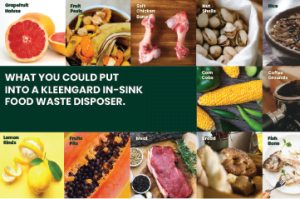
Here’s a list of food waste materials that are able to be flushed down your food waste disposer:
  • Soft Chicken Bones
  • Fish Bones
  • Vegetables
  • Fish Head
  • Grapefruit Halves
  • Lemon Rinds
  • Prawn Shells
  • Tea Leaves
  • Bread
  • Egg Shells
  • Corn Cobs
  • Potato Peels
  • Banana Peels
  • Fruit Pits
  • Meat
  • Noodles and Rice
  • Nut Shells
  • Coffee Grounds

While the food waste materials listed above may be disposed of with a KleenGard In-Sink Food Waste Disposer, it’s important to understand what food waste can an in-sink food waste disposer Handle. Some unlisted items, like cold running water, citrus fruits, and even biodegradable dishwashing soap, can bring unexpected benefits to your disposer, helping to maintain its efficiency and cleanliness.

For cold running water, is it a recommended method to help carry food waste down the drain while the food waste disposer is running. To ensure food waste scraps do not get stuck at the bottom, leading to a possible clog and bad odor, it is often wise to keep the cold running water on for ten seconds before and after using the KleenGard In-Sink Food Waste Disposer.

Another item that helps break down the gunk inside your food waste disposer while replacing bad odor with a refreshing scent is citrus fruits. This is because the acidity of citrus fruits will help break down the gunk that causes clogging and bad odor. To make this method even more effective, cut the citrus fruit into wedges and wash it down the disposer with cold running water.
Last but not least, at this point, if you’ve read the previous blog about what you shouldn’t put into a KleenGard In-Sink Food Waste Disposer, you will know that grease is an enemy to disposers no matter the caliber. Thus, anti-grease chemicals in dishwashing soap are immensely helpful in breaking down the congealed grease inside your disposer, leading to a cleaner and longer-lasting food waste disposer.
CategoriesNews

Avoid Clogs: What Not to Put in Your Kitchen Disposer

KleenGard In-Sink Food Waste Disposers are a convenient way to dispose of food waste at home, but not everything can be disposed using a food waste disposer!
While most food waste disposers can grind almost anything you throw into them, the same cannot be said of your pipes. Some food waste such as grease, fats, and oils can clog the pipes, and lead to a kitchen disaster in the making. These particular food waste materials will often start out in a liquid state, and then eventually congeal, thus clogging the pipes in their congealed state.
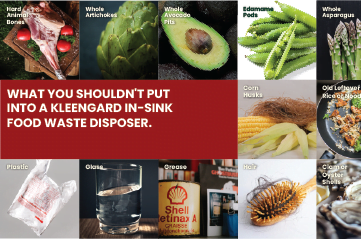
Here’s a list of other food waste materials that are not suited to being flushed down your food waste disposer:
  • Hard animal bones
  • Whole avocado pits
  • Whole artichokes
  • Clam or oyster shells
  • Concentrated oil
  • Corn husks
  • Plastic
  • Metals
  • Old leftover rice or noodles
  • Dust
  • Hair
  • Edamame pods
  • Rocks
  • Glass
  • Uncooked rice
  • Paper
  • Grease
  • Whole asparagus
One other thing that people may not realize about food waste, is that creamy food like dairy products, peanut butter, ice creams, and butter can also cause issues. And while sometimes small amounts of grease will enter the pipes regardless when washing dishes, cold water can solve the issue of grease congealing, thus allowing your food waste disposer to break it up and reduce any clogging opportunities.
Of course, that is not to say that all food waste disposers cannot process any heavy duty food waste. Food waste disposers with higher horsepower can in fact tackle more tough to handle food such as hard bones and the like, perhaps even without causing too much noise. If you regularly need to grind bones and other heavy duty food waste items such as fruit pits and corn cobs, you probably need a food waste disposer with more horsepower like the KleenGard SD1250.
However, it is definitely still better to be safe than sorry and stay cautious about putting bones into your food waste disposer, as it could be that your home’s pipes can’t handle the intrusion instead. This is because even small to medium sized chunks of bone and other harder to grind food waste can cause a potential clogging in your pipes. Regardless if your house is a newer unit with pristine PVC pipes, or an old unit with rusted iron pipes, it’s still a good idea to maintain the habit of prevention rather than cure.
CategoriesNews

Bottle Traps & Sinks, OH MY.

Bottle traps are usually found under every kitchen sink. They come in three types of shapes generally, and are meant to prevent bad odors in kitchens by preventing sewer gasses from backing up or escaping into your home via the sink. Bad odors can also be caused by food waste accumulating inside the bottle trap.
While bottle traps also tend to have removable filters that can help in capturing any items that aren’t meant to have been washed down the drain, that doesn’t mean that having a bottle trap under the sink lets you wash food waste down the pipes! In fact, the filters tend to trap food waste and other debris like hair inside the pipes, which causes clogging. Plus, having to change out the filter every so often to avoid having your pipes being clogged is another hassle to deal with.
Thanks to the installation of a food waste disposer, the bottle trap will become obsolete; there is no need for it anymore. And that’s why the bottle trap must not be kept when the KleenGard In-Sink Food Waste Disposer is already installed, as the water will backflow upwards from the sink pipe when in use, which will cause a huge mess later.
KleenGard is the only kitchen tool that grinds away food waste into tiny particles that is flushed into the drain. Food waste is a health hazard that your family and environment deserves to be free from. That’s why, installing a KleenGard In-Sink Food Waste Disposer in your kitchen helps keep the earth cleaner with every grind.
CategoriesNews

Stay Worry Free & Reduce Your Maintenance Fees With Kleengard.

There’s nothing more frustrating than having to wait for the plumber to arrive while your kitchen sink is clogged up and flooding the area with water and disgusting particles of food waste and more. The KleenGard In-Sink Food Waste Disposer is the solution to your kitchen sink woes because it’s economical, eco-friendly, and easy to use!
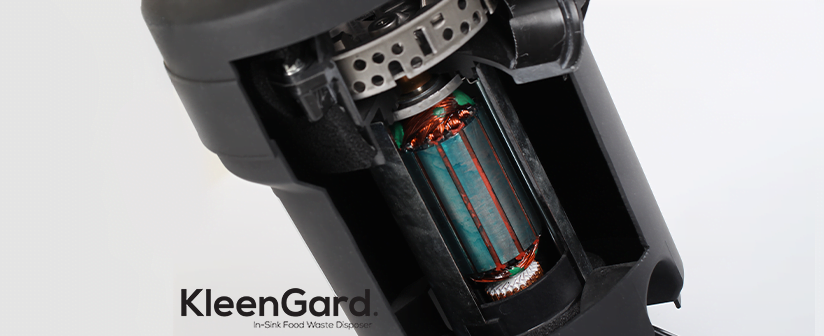
The internal parts are coated with the BioShield Antimicrobial Protection coating, which provides a 99.9% antibacterial protection without toxicity to people or the environment, while also curbing odor generation. Plus, every KleenGard In-Sink Food Waste Disposer is corrosion proof and comes with a lifetime warranty against failure caused by corrosion. The removable splash guard also makes cleaning and maintenance easy, all while only being recommended to be replaced twice a year based on your usage.
Speaking of easy cleaning and maintenance, the KleenGard does away with conventional maintenance necessities, such as the need for any oil changes. In the rare event that your KleenGard malfunctions, the double energy protection feature will shut off the disposer automatically for your protection and safety. Plus, KleenGard also comes with a magnetic Silver Guard that captures most metal objects from falling into the disposer chamber. This protective feature prevents damage to cutleries and the disposer, saving cost on repairs.
KleenGard is the only kitchen tool that grinds away food waste into tiny particles that is flushed into the drain. Food waste is a health hazard that your family and environment deserves to be free from. That’s why, installing a KleenGard In-Sink Food Waste Disposer in your kitchen helps keep the earth cleaner with every grind.
If you’re ready to go green and stay clean with KleenGard as your new kitchen companion, contact us today for more information at 03-8741 7300!
CategoriesNews

Key Installation Requirements for Food Waste Disposer.

KleenGard In-Sink Food Waste Disposers are available in three different options to suit a variety of household, commercial, and industrial usages. Understanding the Key Installation Requirements is essential, as these disposers can be installed with granite, solid surface, or stainless steel sinks. They are also compatible with single or double bowl type sinks.

Before you install a KleenGard In-Sink Food Waste Disposer below your kitchen sink, there are several key installation requirements you need to ensure.

1. First of all, your kitchen sink area should have a stable power source (with at least 13 AMP) nearby to facilitate the usage of the food waste disposer. Without a power source, the KleenGard In-Sink Food Waste Disposer cannot operate.
2. Once the power source is confirmed to be suitable for the installation of a KleenGard In-Sink Food Waste Disposer, next is the size of the sink hole your sink comes with. The shape of the sink hole can be round or square, so long as the size is at least 100 mm in circumference.

3. Thanks to the installation of the food waste disposer, the bottle trap will become obsolete; there is no need for it anymore. The bottle trap must not be kept while the KleenGard In-Sink Food Waste Disposer is installed, as the the water will backflow upwards from the sink pipe when in use, which will causes a huge mess later.

KleenGard is the only kitchen tool that grinds away food waste into tiny particles that is flushed into the drain. Food waste is a health hazard that your family and environment deserves to be free from. That’s why, installing a KleenGard In-Sink Food Waste Disposer in your kitchen helps keep the earth cleaner with every grind.